
Wild Species In India
Elephant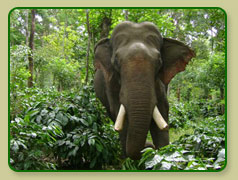
Physical Feature
The Asian elephant has been captured, tamed and worked by people for more than 4,000 years; it triggers the human imagination like no other animal. An average Indian elephant is anything between 2.4 m to 3 m tall, and weighs anything between 3,600 kg to 5000 kg! Elephants in general are the largest existing land mammals and they have the biggest brains in the animal kingdom (weighing 5 kg or 11 lbs). Their hearts beat 28 times a minute. It also requires about 200 kg of green fodder, and due to dwindling habitat areas, there has been a drastic fall in their numbers. They are now an endangered species.
Habitat & Diets
The Asian elephant is found in the wild in Bangladesh, Bhutan, Cambodia, China, India, Indonesia, Laos, Malaysia, Myanmar, Nepal, Sri Lanka, Thailand and Vietnam. Asian elephants are randomly nomadic in accord with the season. Historically, they travel on a set course over longer periods that may take them as much as ten years to complete before arriving back at any one point. However, these travel patterns have been greatly reduced as fast-growing human populations now confine most elephants to National Parks because of habitat destruction and settlement encroachment.
They are found in a wide variety of forest types, but they tend to avoid large forests of closed canopies. Their distribution is limited by the need for water (about 100 liters) every day. Elephants are herbivores and spend up to 20 hours a day eating anywhere from 150 kg to 300 kg of jungle fodder or 6% to 8% of their body weight in food each day. They prefer feeding on grasses; however they also eat large amounts of bark, roots and leaves. Understandably, when elephants come across cultivated crops this food becomes addicting and as a result leads to human elephant confrontations. As far as cultivated foods, they seem to prefer rice, bananas and sugar cane.
- Major Regions: Karnataka, Tamilnadu, Kerala, Uttara Pradesh, Orissa, & Assam
- Famous Elephant Reserves: Periyar Widlife Sanctuary, Bandipur & Nagarhole National Parks
- Other Wildlife Attractions: Tiger, Gaur, Sambar, Chital, Leopard.
Physical Feature
The Asian elephant has been captured, tamed and worked by people for more than 4,000 years; it triggers the human imagination like no other animal. An average Indian elephant is anything between 2.4 m to 3 m tall, and weighs anything between 3,600 kg to 5000 kg! Elephants in general are the largest existing land mammals and they have the biggest brains in the animal kingdom (weighing 5 kg or 11 lbs). Their hearts beat 28 times a minute. It also requires about 200 kg of green fodder, and due to dwindling habitat areas, there has been a drastic fall in their numbers. They are now an endangered species.
Habitat & Diets
The Asian elephant is found in the wild in Bangladesh, Bhutan, Cambodia, China, India, Indonesia, Laos, Malaysia, Myanmar, Nepal, Sri Lanka, Thailand and Vietnam. Asian elephants are randomly nomadic in accord with the season. Historically, they travel on a set course over longer periods that may take them as much as ten years to complete before arriving back at any one point. However, these travel patterns have been greatly reduced as fast-growing human populations now confine most elephants to National Parks because of habitat destruction and settlement encroachment.
They are found in a wide variety of forest types, but they tend to avoid large forests of closed canopies. Their distribution is limited by the need for water (about 100 liters) every day. Elephants are herbivores and spend up to 20 hours a day eating anywhere from 150 kg to 300 kg of jungle fodder or 6% to 8% of their body weight in food each day. They prefer feeding on grasses; however they also eat large amounts of bark, roots and leaves. Understandably, when elephants come across cultivated crops this food becomes addicting and as a result leads to human elephant confrontations. As far as cultivated foods, they seem to prefer rice, bananas and sugar cane.
 Rajasthan Camel Safari Tours
Corbett Wildlife Tours
North East Wildlife Tours
Wildlife with Taj Mahal Tours
South India Wildlife Tour Package
Rajasthan Wildlife Holiday
Tiger Safari Holiday
Luxury India Wildlife Tours
India Nepal Wildlife Tour
Ranthambore National Parks Tours
Bandhavgarh National Park Tour
Wildlife Photographic Tours To India
Tiger Tour packages
Kerala Wildlife Tour
Rajasthan with Wildlife Tours
Taj Mahal Agra & Ranthambore Tiger Tour
Rajasthan Camel Safari Tours
Corbett Wildlife Tours
North East Wildlife Tours
Wildlife with Taj Mahal Tours
South India Wildlife Tour Package
Rajasthan Wildlife Holiday
Tiger Safari Holiday
Luxury India Wildlife Tours
India Nepal Wildlife Tour
Ranthambore National Parks Tours
Bandhavgarh National Park Tour
Wildlife Photographic Tours To India
Tiger Tour packages
Kerala Wildlife Tour
Rajasthan with Wildlife Tours
Taj Mahal Agra & Ranthambore Tiger Tour
