Wild Species In India
Antilopes
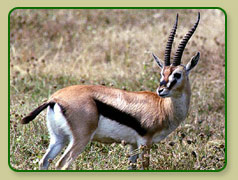 Antilopes called as Kala Hiran It is the sole representative of the genus Antilope. In Hindu religion Black buck is a vehicle of Chandrama (soma or chandra) (moon). This is a symbol of purity prosperity and peace. It is mainly found in India but with other small populations in Pakistan and Nepal. The adult male stands about 80 cm (about 32 in) at the shoulder and weighs 32 to 43 kg (71 to 95 lb). Males are dark brown and has ringed horns that have a moderate spiral twist of three to four turns. The light-brown female is usually hornless. The body's upper parts are black, White highlights the eyes, ears, chin, under parts, and rump. The fawns are brown but turn tan after about a month. This is exclusively an Indian animal is perhaps the most graceful and beautiful of its kind. except the North eastern region they are found throughout India but are majorly seen in Rajasthan, Punjab, Haryana, Gujarat and central India. It does not live in dense forest Black bucks frequent the open plains in herds, It is one of the fastest animals on earth and can out run any animal over long distances. Open plains, which allows it to move fast, are therefore needed to protect it from predators.
Physical Traits
The Indian antelope is one of the most elegant of all antelopes; it's due to its striking colour and wonderful spiral horns. The upper body part of a male black buck is covered with black fur while the chest, belly and the inner sides have white fur. A beautiful contrast indeed! White rings around their eyes add much to the beauty of their features. The average weight of a balck buck is 40 kg. Horns, that may have three to four turns, measure between 50 and 65 cm. Horned females are rarely spotted. Though there is no particular time for breeding, the period between February and March is quite interesting, as this is the time when the bucks fight against each other to acquire the does.
Habitat & Diet
It used to be found all over India except the northeast. Now it is seen in Panjab, Rajasthan, Haryana, Gujarat and central India. It does not live in dense forest but in open plains. It is one of the fastest animals on earth and can out run any animal over long distances. Open plains, which allows it to move fast, are therefore needed to protect it from predators.
The males darken at maturity and the most dominant male in the herd has a black coat. White highlights the eyes, ears, chin, under parts, and rump. Even fawns have these markings. They are brown but turn tan after about a month. Grown males have ringed horns spiraling in a V at least thirty-three centimeters above the head. Record trophies exceed fifty centimeters. The black buck eats mainly grasses. Pods, fruits, and flowers supplement this diet. Few black bucks live longer than twelve years, and their maximum life span is about sixteen years.
Spotting the Black Buck
The black buck is a major draw for wildlife visitors to India. There are a number of sanctuaries and national parks where the graceful Indian antelope can be easily spotted.
Antilopes called as Kala Hiran It is the sole representative of the genus Antilope. In Hindu religion Black buck is a vehicle of Chandrama (soma or chandra) (moon). This is a symbol of purity prosperity and peace. It is mainly found in India but with other small populations in Pakistan and Nepal. The adult male stands about 80 cm (about 32 in) at the shoulder and weighs 32 to 43 kg (71 to 95 lb). Males are dark brown and has ringed horns that have a moderate spiral twist of three to four turns. The light-brown female is usually hornless. The body's upper parts are black, White highlights the eyes, ears, chin, under parts, and rump. The fawns are brown but turn tan after about a month. This is exclusively an Indian animal is perhaps the most graceful and beautiful of its kind. except the North eastern region they are found throughout India but are majorly seen in Rajasthan, Punjab, Haryana, Gujarat and central India. It does not live in dense forest Black bucks frequent the open plains in herds, It is one of the fastest animals on earth and can out run any animal over long distances. Open plains, which allows it to move fast, are therefore needed to protect it from predators.Physical Traits
The Indian antelope is one of the most elegant of all antelopes; it's due to its striking colour and wonderful spiral horns. The upper body part of a male black buck is covered with black fur while the chest, belly and the inner sides have white fur. A beautiful contrast indeed! White rings around their eyes add much to the beauty of their features. The average weight of a balck buck is 40 kg. Horns, that may have three to four turns, measure between 50 and 65 cm. Horned females are rarely spotted. Though there is no particular time for breeding, the period between February and March is quite interesting, as this is the time when the bucks fight against each other to acquire the does.
Habitat & Diet
It used to be found all over India except the northeast. Now it is seen in Panjab, Rajasthan, Haryana, Gujarat and central India. It does not live in dense forest but in open plains. It is one of the fastest animals on earth and can out run any animal over long distances. Open plains, which allows it to move fast, are therefore needed to protect it from predators.
The males darken at maturity and the most dominant male in the herd has a black coat. White highlights the eyes, ears, chin, under parts, and rump. Even fawns have these markings. They are brown but turn tan after about a month. Grown males have ringed horns spiraling in a V at least thirty-three centimeters above the head. Record trophies exceed fifty centimeters. The black buck eats mainly grasses. Pods, fruits, and flowers supplement this diet. Few black bucks live longer than twelve years, and their maximum life span is about sixteen years.
Spotting the Black Buck
The black buck is a major draw for wildlife visitors to India. There are a number of sanctuaries and national parks where the graceful Indian antelope can be easily spotted.
- Blackbuck National Park, Velavadar (Gujarat)
- Bandhavgarh National Park (Madhya Pradesh)
- Kanha National Park (Madhya Pradesh)
- Ranthambhore National Park (Rajasthan)
- Jim Corbett National Park (Uttaranchal)
- Bharatpur Bird Sanctuary (Rajasthan)
- Gir National Park (Gujarat)
- Guindy National Park (Tamil Nadu)
 Rajasthan Camel Safari Tours
Corbett Wildlife Tours
North East Wildlife Tours
Wildlife with Taj Mahal Tours
South India Wildlife Tour Package
Rajasthan Wildlife Holiday
Tiger Safari Holiday
Luxury India Wildlife Tours
India Nepal Wildlife Tour
Ranthambore National Parks Tours
Bandhavgarh National Park Tour
Wildlife Photographic Tours To India
Tiger Tour packages
Kerala Wildlife Tour
Rajasthan with Wildlife Tours
Taj Mahal Agra & Ranthambore Tiger Tour
Rajasthan Camel Safari Tours
Corbett Wildlife Tours
North East Wildlife Tours
Wildlife with Taj Mahal Tours
South India Wildlife Tour Package
Rajasthan Wildlife Holiday
Tiger Safari Holiday
Luxury India Wildlife Tours
India Nepal Wildlife Tour
Ranthambore National Parks Tours
Bandhavgarh National Park Tour
Wildlife Photographic Tours To India
Tiger Tour packages
Kerala Wildlife Tour
Rajasthan with Wildlife Tours
Taj Mahal Agra & Ranthambore Tiger Tour
