Kaziranga National Park
The name, Great Indian One Horned Rhinoceros conjures up images of a
prehistoric animal from a bygone era. 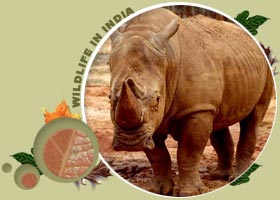 But to our good fortune, this lord of the Gangetic, Indus and Brahmaputra plains still survives albeit declining numbers due to poaching.
In the early 20th century, the British Government realised the plight of the one-horned rhino and in 1908 declared Kaziranga a Reserved Forest, officially closed for shooting. This park is located in central Assam lying partly in the Golaghat and Nagaon Districts. It is located along the main highway between Jorhat and Guwahati, making for easy accessibility.
This National Park lies on the south bank of the Brahmaputra in 1974. It is famous for Rhino. Kaziranga was declared a Wildlife National Park. At present, It covers an area of 688 sq. kilometres and is an abode for not only the Rhino, but also the Wild Buffaloes. The apparently treeless country makes for very easy animal sightings, although the 2m high elephant grasses can hide even the largest of terrestrial mammals, Asian Elephants. Even a single day's visit can yield excellent mammalian sightings. Though the park boasts of housing the Tiger, sightings are a relative rarity.
Wild Species In Kaziranga
The wildlife diversity of the park comprises of mammals such as the Asiatic Elephants, Gaur, Swamp deer, Sambar, Hog deer, Sloth Bear, Tiger, Leopard Cats, Jungle cats, wild pigs, Jackals, Porcupines, Pythons, Buffaloes and the One Horned Rhinoceros.
The avian population of the park is extremely diverse covering rae and common species like the Rosy Pelican, Spotbill and Nakta Duck, Bar-headed Geese, Grey Hornbills, Ibis, Cormorant, Black-necked stork, Lesser adjutants, Ring tailed fishing eagles, several types of Egrets, Herons, Jungle Fowl and Cranes. During winters a large number of migratory birds visit here.
Must Visit Local Attractions
Kaziranga faces hot summers and cold winters. The average rainfall is 160 cm. During the monsoon months, heavy downpours often flood the park. Carry cotton clothes for summers and woollens for winters.
Best Time to Visit
November to April. Monsoons are best avoided due to the floods and tall elephant grass which make sightings impossible.
Accommodation
There is a wide range of accommodation facility at the park with rest houses, dormitory and lodges maintained by the Forest Department and the Assam Tourism Development Corporation (ATDC). The forest department has two rest houses and one dormitory. Assam Tourism Development Corporation (ATDC) has three lodges. The lodges have A/C and non-A/C rooms. Wild Grass is a private resort, which offers good facilities.
How to get there
But to our good fortune, this lord of the Gangetic, Indus and Brahmaputra plains still survives albeit declining numbers due to poaching. In the early 20th century, the British Government realised the plight of the one-horned rhino and in 1908 declared Kaziranga a Reserved Forest, officially closed for shooting. This park is located in central Assam lying partly in the Golaghat and Nagaon Districts. It is located along the main highway between Jorhat and Guwahati, making for easy accessibility.
This National Park lies on the south bank of the Brahmaputra in 1974. It is famous for Rhino. Kaziranga was declared a Wildlife National Park. At present, It covers an area of 688 sq. kilometres and is an abode for not only the Rhino, but also the Wild Buffaloes. The apparently treeless country makes for very easy animal sightings, although the 2m high elephant grasses can hide even the largest of terrestrial mammals, Asian Elephants. Even a single day's visit can yield excellent mammalian sightings. Though the park boasts of housing the Tiger, sightings are a relative rarity.
Wild Species In Kaziranga
The wildlife diversity of the park comprises of mammals such as the Asiatic Elephants, Gaur, Swamp deer, Sambar, Hog deer, Sloth Bear, Tiger, Leopard Cats, Jungle cats, wild pigs, Jackals, Porcupines, Pythons, Buffaloes and the One Horned Rhinoceros.
The avian population of the park is extremely diverse covering rae and common species like the Rosy Pelican, Spotbill and Nakta Duck, Bar-headed Geese, Grey Hornbills, Ibis, Cormorant, Black-necked stork, Lesser adjutants, Ring tailed fishing eagles, several types of Egrets, Herons, Jungle Fowl and Cranes. During winters a large number of migratory birds visit here.
Must Visit Local Attractions
- Kakochang waterfalls
13km from Bokakhat - Numaligarh
These ancient ruins are of great archaeological importance. The Tea Gardens of Hatikhuli, Methoni, Difalu, Behora Borchapori are also other local attractions. The coffee and rubber plantations can be seen behind the Assam Tourism Lodges. - Park Visits
The park can be visited on elephant back or in jeeps/cars. There are trips covering Mihimukh, Baguri, Hole Path, Arimarah, Kohora Central Path-Baguri all areas teeming with wildlife - all authentically wild!
Kaziranga faces hot summers and cold winters. The average rainfall is 160 cm. During the monsoon months, heavy downpours often flood the park. Carry cotton clothes for summers and woollens for winters.
Best Time to Visit
November to April. Monsoons are best avoided due to the floods and tall elephant grass which make sightings impossible.
Accommodation
There is a wide range of accommodation facility at the park with rest houses, dormitory and lodges maintained by the Forest Department and the Assam Tourism Development Corporation (ATDC). The forest department has two rest houses and one dormitory. Assam Tourism Development Corporation (ATDC) has three lodges. The lodges have A/C and non-A/C rooms. Wild Grass is a private resort, which offers good facilities.
How to get there
- Air
The nearest airport is Jorhat. - Road
Guwahati is about 239km and Jorhat is 96km. There are regular bus services from all over the state for Kaziranga. The bus drops you off at Kohara, which is very close to the park entrance. Private taxis are also available. - Rail
The nearest railhead is Furkating at about 75km from the park.
Rajasthan Camel Safari Tours
Corbett Wildlife Tours
North East Wildlife Tours
Wildlife with Taj Mahal Tours
South India Wildlife Tour Package
Rajasthan Wildlife Holiday
Tiger Safari Holiday
Luxury India Wildlife Tours
India Nepal Wildlife Tour
Ranthambore National Parks Tours
Bandhavgarh National Park Tour
Wildlife Photographic Tours To India
Tiger Tour packages
Kerala Wildlife Tour
Rajasthan with Wildlife Tours
Taj Mahal Agra & Ranthambore Tiger Tour
